
What My Phone Couldn’t Catch: A Night Under the Perseids at Mount Rainier
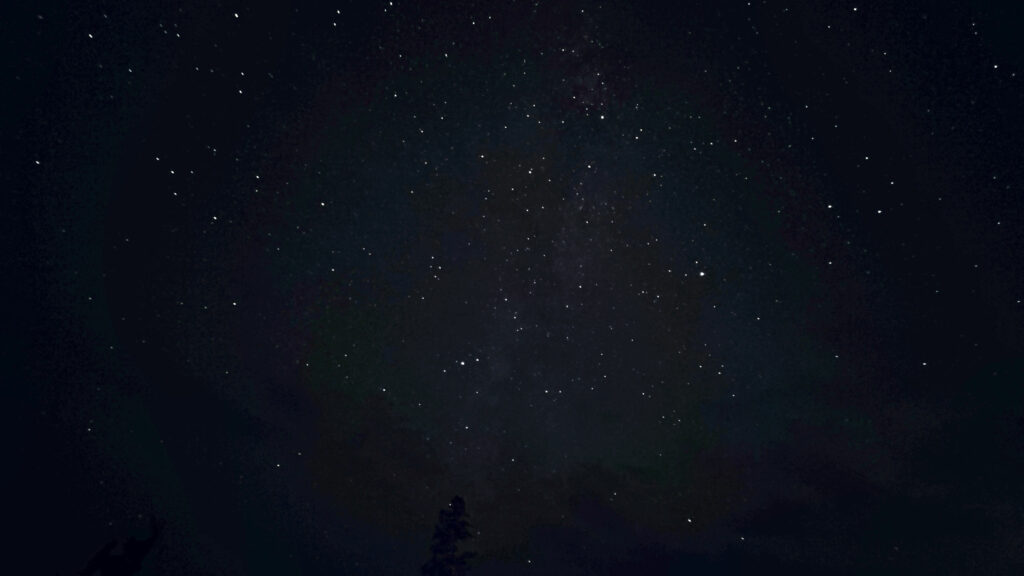
We saw the first meteor almost immediately. A short white streak flashed across one part of the sky and vanished before I could even decide where to point my phone. A few minutes later, another appeared somewhere else, then another. They looked nothing like the enormous ‘shooting stars’ used in advertising images. Most were small, bright strokes that existed for less than a second before the sky returned to darkness.
We had come to Paradise in Mount Rainier National Park, about two hours from Tacoma, to watch the Perseids. Somewhere nearby, Mount Rainier itself should have been towering over us, but at night the mountain had disappeared completely. I knew it was there and still could not make out even its silhouette. What I could see was the sky — the kind of sky that city light almost never allows you to notice.
Why I Decided to Go Chasing a Meteor Shower
A friend reminded me about the Perseids, and the idea of going somewhere dark in the middle of the night settled into my head almost immediately. I have always liked space-related subjects. I often put on popular-science videos before going to sleep — about planets, stars, black holes, the origin of the universe, or the possibility of life elsewhere.
It is, admittedly, a strange bedtime ritual. Instead of falling asleep peacefully, I start thinking about the scale of the universe and about how even the speed of light — which feels almost instantaneous in ordinary human life — becomes painfully slow once interstellar distances enter the picture. The Milky Way is roughly 100,000 light-years across. The nearest star beyond the Sun is more than four light-years away. You can learn those numbers, but the human mind is not particularly good at turning them into something that feels real.
Maybe there are other intelligent civilizations somewhere out there. Maybe there are many. But the distances are so immense that we may never be close enough to one another not only in space, but in time. That is not a scientific conclusion, of course — just the kind of thought that comes easily to someone who watches too many space documentaries before bed. Under a genuinely dark sky, though, those thoughts feel much less abstract.
My Second Attempt at the Perseids
This was not my first trip to watch a meteor shower. In 2023, I had already driven into the mountains and stopped at a turnout near I-90. There were far more stars than in the city, but the location was still far from ideal. Traffic moved nearby, headlights kept sweeping through the darkness, and there were enough other sources of light that my eyes never fully settled into the night.
This time I wanted to go farther. After comparing several places, I chose Paradise at Mount Rainier. The conditions in 2026 were unusually favorable: the Perseids peaked on the night of August 12–13, and August 12 was a new moon, so moonlight barely interfered with the faintest meteors and stars. Another popular high-elevation area, Sunrise, was closed because of the Grand Park 2 Fire, which made Paradise the obvious choice for us.
Two Hours on a Road You Can Barely See
I left home at around eleven at night, picked up my friend near Tacoma Dome, and then we had roughly two hours of driving ahead of us. I am sure the road is beautiful during the day: forest, mountain slopes, valleys, and views of Rainier. At night, nearly all of that disappears. You are left with a narrow strip of asphalt in the headlights, trees on either side, and one curve after another.
I had never driven that road before, so it was not especially relaxing. In places, the edge of the pavement gave way to complete blackness. You could tell there was a slope or drop beyond it, but you could not actually see it. Night drives into the mountains look wonderfully romantic in travel videos. In reality, mine was more like: headlights, trees, turn, another turn, and the occasional reminder that I would eventually have to drive the same road back home.
Still, once we reached Paradise and stepped out of the car, it was immediately clear why the drive had been worth it.
Our Little Observatory in a Parking Lot
Even well after midnight, the parking lot was busy. Clearly, we were not the only people who had decided to spend the night under the Perseids. We found a space without much trouble and chose not to wander far from the car. I had brought two camping chairs. One was nearly perfect: the high back let me lean away and look upward without straining my neck. The other turned out to be an excellent lesson in the difference between a picnic chair and an astronomy chair. To see the sky, you had to tilt your head so far back that your neck started hurting within minutes.
We eventually folded the second chair, put it flat on the pavement, and my friend settled on top of it with a pillow and blanket. From a distance, we probably looked less like amateur astronomers and more like two people attempting to spend the night in a parking lot after a very unsuccessful picnic.
It was cold — much colder than the same temperature would feel while walking. When you sit almost motionless outdoors for two hours, the chill works its way in quickly. I had dressed like an onion: two pairs of pants, warm socks, a T-shirt, a hoodie, a leather jacket, and a hat. We also brought blankets, pizza, pastries, and hot coffee in a travel mug. Contemplating your own insignificance in an infinite universe is much more comfortable with hot coffee and a slice of pizza.
What the Perseids Actually Look Like
The meteors appeared regularly that night. My entirely non-scientific impression was roughly one every three to five minutes, although I was not keeping a formal count. We talked, ate, checked photographs, and occasionally got distracted by passing cars. Most of the meteors looked similar: a very fast white line suddenly appeared somewhere in the sky and disappeared almost immediately. Some were brighter or longer than others. Some were so subtle that only one of us noticed them.
There was no single ‘correct’ place to stare. One meteor appeared to the left, the next might be high overhead, and another would flash exactly where you had stopped looking. The Perseids return each year as Earth passes through debris left by Comet 109P/Swift–Tuttle. NASA says those particles enter the atmosphere at about 59 kilometers per second. Under a truly dark sky, NASA gives a rough expectation of around 25 visible meteors per hour, although what any one person sees depends on time, cloud cover, light pollution, the available view, and simple luck.
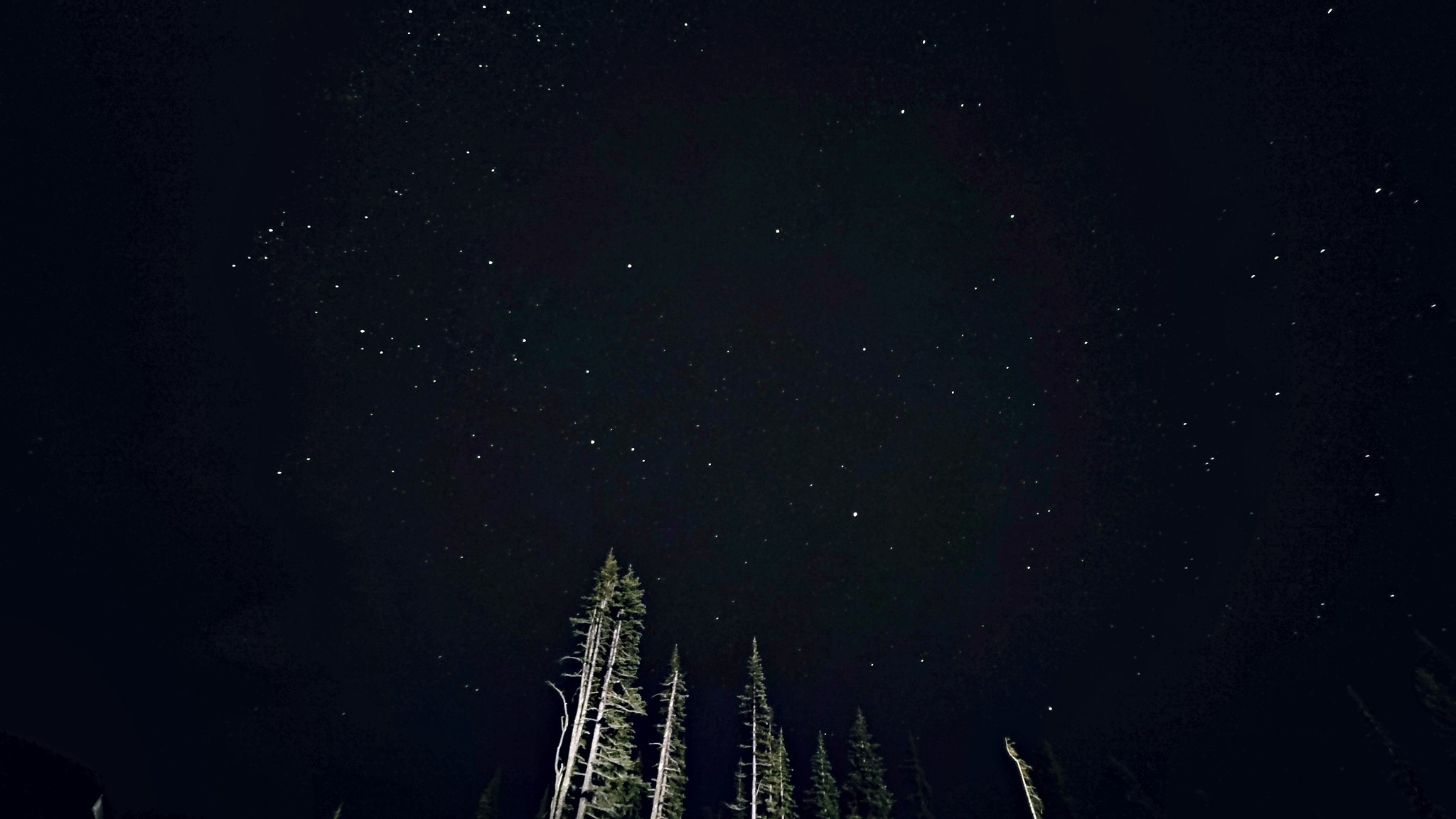
Cars were one of the main interruptions at Paradise. Every ten or fifteen minutes someone would arrive or leave, and headlights would briefly destroy the darkness our eyes had spent time adapting to. They also ruined some thirty-second exposures on my phone. A few times, though, the opposite happened: the passing light illuminated the trees in an unexpectedly interesting way.
And Then I Saw the Milky Way
In the end, the strongest impression of the night was not even the meteor shower. I think this was the first time in my life that I saw the Milky Way so clearly with my own eyes. It does not look the way it does in professional astrophotography, where a bright, detailed river of stars seems to cut across the sky. At first, you simply notice that there are far more stars than usual. Then, as your eyes adapt, a faint and uneven band begins to emerge among them.
At some point, you understand what you are actually looking at. This is not a distant cloud sitting somewhere beyond our galaxy. We are inside the Milky Way, looking through its disk. You can read that the galaxy is about 100,000 light-years across and contains hundreds of billions of stars, but after a while those numbers become meaningless abstractions. Then you are sitting on a camping chair in the middle of the night, eating pizza that has already gone cold, and that same galaxy is stretched over your head. Suddenly the abstraction has a physical place in your field of view.
We Are Very Small. That Isn’t Necessarily a Bad Thing.
Under a sky like that, it is difficult not to think about the scale of your own life. We appear, study, work, build homes and countries, argue, fall in love, worry about money, relationships, jobs, and comments on the internet. The entire span of human civilization occupies almost nothing compared with cosmic time.
My thoughts moved fairly quickly from harmless pieces of Swift–Tuttle to asteroids, supernovae, gamma-ray bursts, solar storms, and all the other reminders that the universe is not particularly designed for human comfort. Life exists inside a remarkably narrow set of conditions. And yet, the feeling of being microscopic did not frighten me as much as I expected. It mostly restored a sense of proportion.
Of course, telling someone who is suffering that the Milky Way is 100,000 light-years wide will not solve anything. Human problems remain real because we are human. But they do not have to be the center of the universe to matter. Cosmic scale makes a human life very short; it does not make it meaningless. If anything, knowing how brief it is can make the moment feel more valuable.
What My Phone Actually Caught
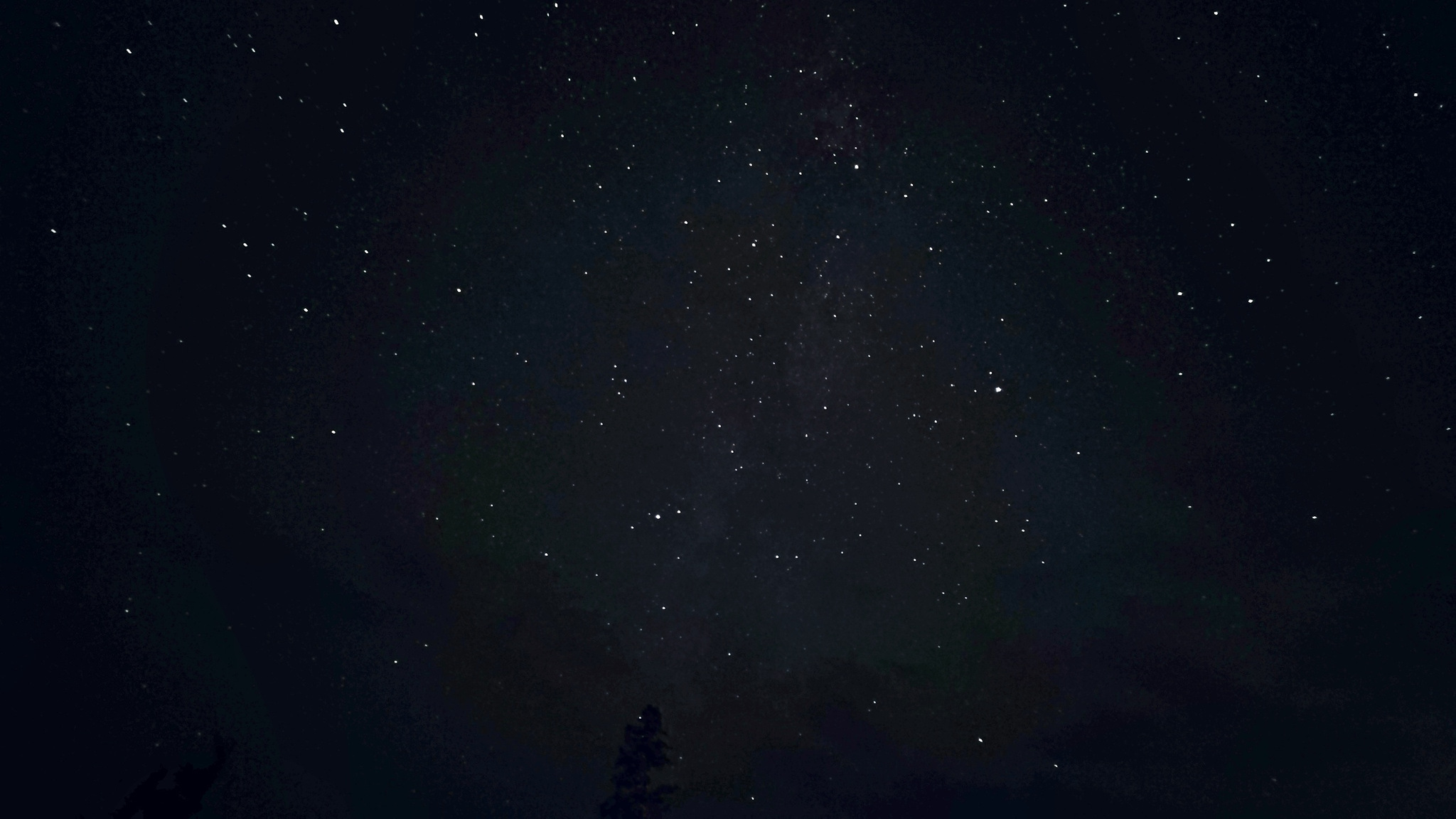
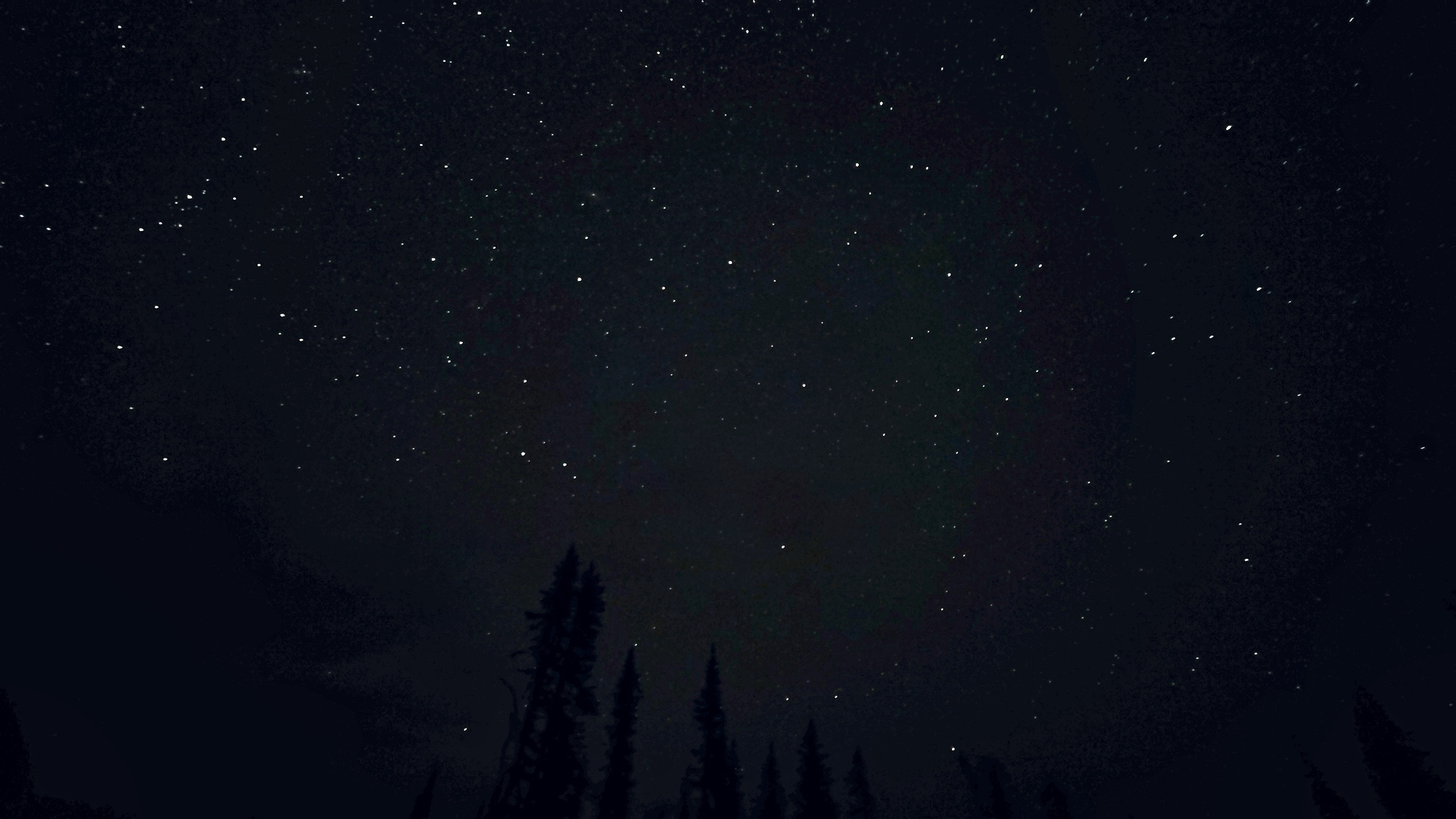
While we watched the sky, my Samsung Galaxy S25 Ultra spent much of the night on a tripod beside us. This was my first serious attempt to use the phone’s professional mode for stars. Some photographs were taken at 15 seconds and ISO 800; others used the ultra-wide camera at 30 seconds and roughly ISO 400–500. By the end of the night, I had 67 frames. The phone captured stars, the Milky Way, tree silhouettes, and the accidental light of passing cars.
It did not capture a single obvious meteor.
That is not especially surprising. The camera was always looking at one limited patch of an enormous sky, while the meteors appeared in completely different places. A meteor could easily flash behind the phone while it spent thirty seconds patiently photographing the opposite direction.
Later I processed the strongest photographs and combined a few consecutive frames to reduce noise. No stars or meteors were added to the main documentary series. Color, brightness, and contrast were adjusted, but the star field itself is real. Separately, I made one artistic reconstruction and a short video with a small meteor similar to the ones we had actually seen. I think the distinction matters, which is why those materials are labeled clearly.
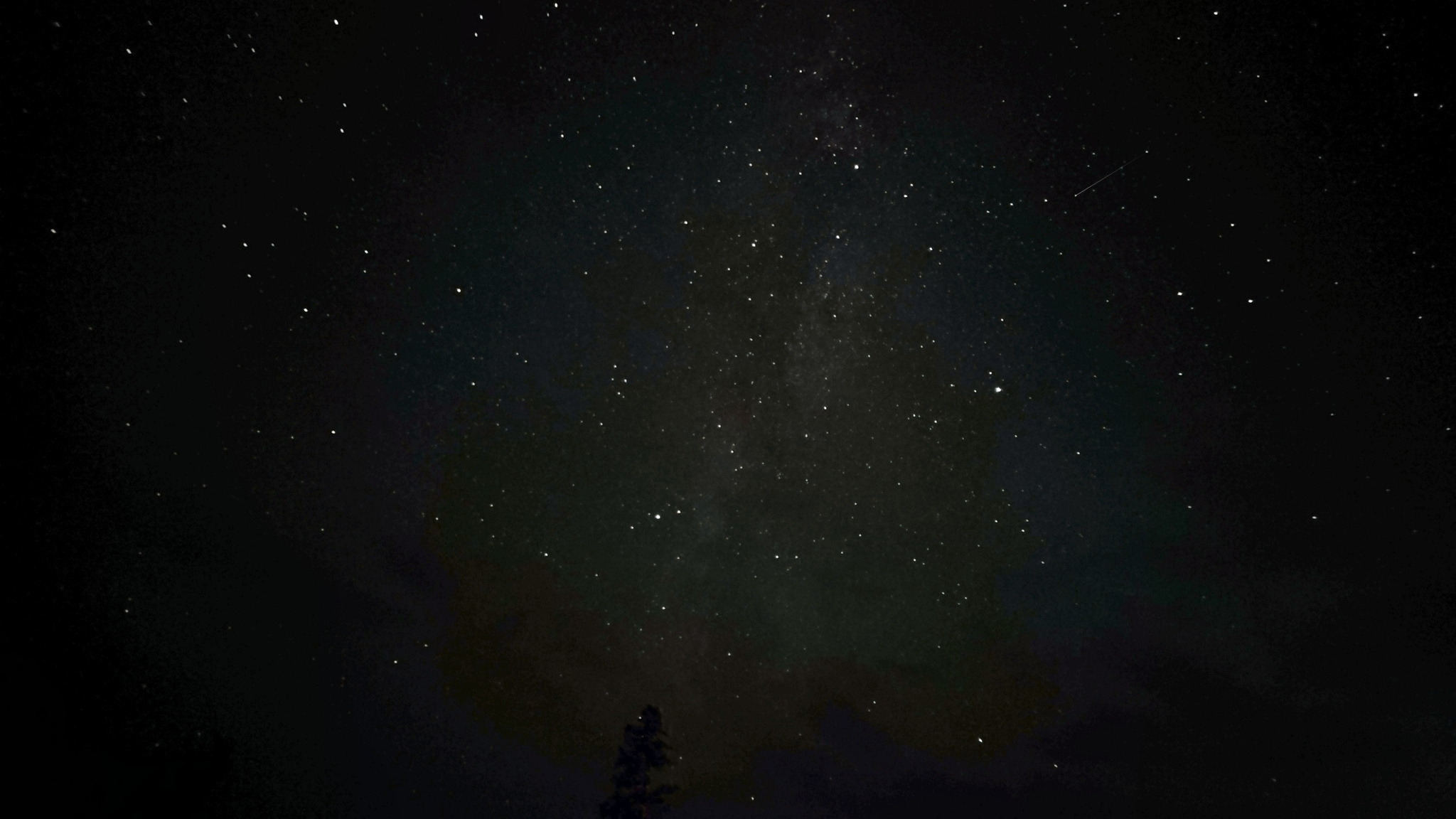
What Was Actually Above Us
I later used one of the photographs to build a map of the night sky. By matching the star positions, it was possible to identify the constellations and major objects in the frame with reasonable confidence. The most obvious structure is the Milky Way. The image also includes Cygnus, Lyra, Aquila, Delphinus, Sagitta, and other constellations, while Vega, Deneb, and Altair form the familiar Summer Triangle.
I deliberately did not label faint galaxies, nebulae, or other objects that could not be identified confidently in the original JPEG. I wanted the map to show what was actually supported by the photograph, rather than turning it into a catalog of everything that theoretically exists in that direction.
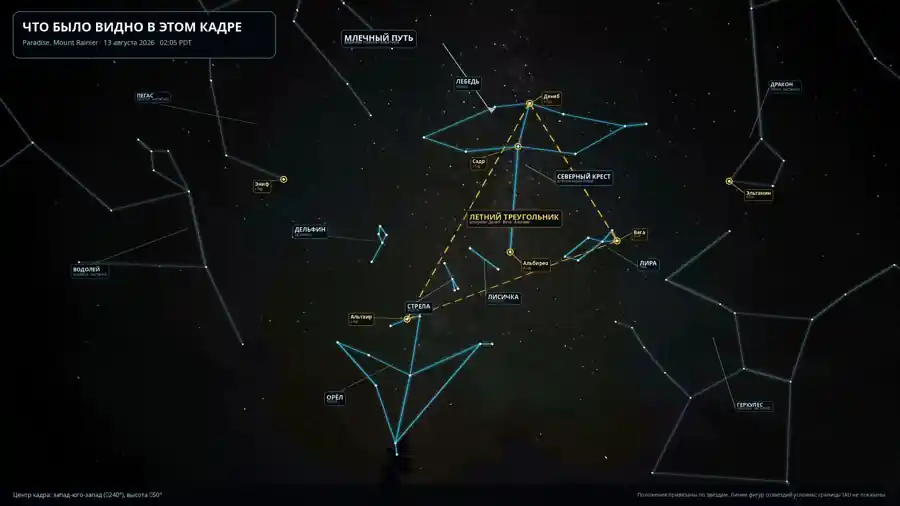
How to Watch the Perseids Yourself
You do not need Mount Rainier — or even a mountain — to watch the Perseids. What matters most is finding a safe location with a dark, open sky. The farther you are from major cities, streetlights, illuminated signs, and steady traffic, the more faint meteors you are likely to see. The Perseids are best viewed from the Northern Hemisphere. They can also be seen from parts of the Southern Hemisphere, but conditions become progressively worse farther south. According to the American Meteor Society, south of roughly 40° south latitude the radiant no longer rises above the horizon, so it would be misleading to say the shower can be seen equally well from anywhere in the world.
Do not stare directly at Perseus. Meteors can appear across a large part of the sky, and their trails actually look shorter near the radiant. The goal is to see as much sky as possible. A telescope or binoculars are not useful here; they narrow your field of view. In many northern locations, the best conditions develop after midnight and toward the hours before dawn as the radiant rises higher, although the exact timing depends on latitude and date.
Dark adaptation matters. A bright phone screen, flashlight, or car headlight can undo the work your eyes have done. Give yourself at least 20–30 minutes in the dark, keep the phone dim, and use red light when you need a flashlight. And do not arrive expecting a five-minute show. A meteor shower is not fireworks. Several quiet minutes can pass before the next streak appears. I would plan at least an hour; two is better.
Before leaving home, check more than the official peak date. Look at the phase and position of the Moon, cloud cover, wildfire smoke, air quality, and local access. A bright Moon can hide many faint meteors even at a dark site. If your viewing location is in a national park, forest, or another protected area, also check road status, nighttime access, fire restrictions, and parking rules.
Bring significantly warmer clothing than the daytime forecast might suggest. Sitting still makes you cold faster than walking. A reclining chair or sleeping pad is far more comfortable than a rigid camping chair. A blanket, pillow, warm socks, thermos, water, food, power bank, and an offline map can all be useful. Most importantly, plan a safe trip home. Coffee helps you feel warmer, but it does not replace sleep. If the driver is tired, stopping to rest is the better decision.
If you want to photograph the sky, use a stable tripod. My settings — 15–30 seconds at ISO 400–800 — are only a starting point because phones and lenses vary. Take test frames, zoom in to confirm that the stars are sharp, and save RAW files when your camera allows it. For meteors, a wide field of view matters more than magnification. And every so often, put the phone down. I tried to catch a meteor in 67 photographs and failed. I still saw plenty with my own eyes.
What Stayed With Me After That Night
We spent about two hours at Paradise. Rainier never emerged from the darkness. My phone did not photograph a single real meteor. Headlights ruined several exposures. Even under multiple layers of clothing, I was still cold from time to time. And yet it was exactly the kind of trip that made two hours on an unfamiliar mountain road worthwhile.
Washington is beautiful for its mountains, forests, ocean, waterfalls, and all the places people travel to see. But sometimes it is enough to leave the city lights behind and discover another attraction that was above you the entire time. The Milky Way does not appear only when we drive into the mountains. It is always there. Most of the time, the city simply prevents us from seeing it.
That night did not solve any of my problems. It did not answer the question of whether intelligent life exists elsewhere, and it did not make interstellar distances any easier to imagine. But for a few hours, it restored a sense of scale. We are very small. Humanity is very small. Even the history we consider long is only a brief flash against the age of the universe.
And perhaps that is exactly why the flash matters. If a human life really lasts only a moment, then sometimes it is worth looking up in time to see the sky.


Comments